I Come From Five Generations of Farmers. Here is Why I Stopped Trusting Almost Every Jar of Ghee Sold in India.
After I learned what really goes into most of them, I went back to my family's way of making it. Then I did the one thing almost no brand will do. I let you check every claim yourself.


Every week, someone tells me their family has eaten pure desi ghee for years. A relative who swears by a village brand. A neighbour who buys the most expensive tin on the shelf. A friend who is certain, absolutely certain, that the jar in her kitchen is the real thing.
Most of them are wrong.
And the hardest part is not that they are wrong. It is that they have no way to know it.
I do not say that to frighten anyone. I am not here to scare you out of your own kitchen. I say it because I spent my whole childhood inside the process that most brands only print on a label. I know the difference between ghee that is made and ghee that is assembled.
I know what it looks like when the milk is real. I know what a kitchen smells like when the butter is churned by hand. And I know, the very moment I lift the lid, when a jar is pretending to be something it is not.
I come from a farming family. Five generations of it.
Before me there was my mother. Before her, her mother. Back and back, to a time when nobody thought to ask whether the ghee was pure, because you had watched it being made with your own two eyes.
I grew up watching milk become curd, curd become butter, and butter become ghee. By hand. The slow way. In my grandmother's kitchen, on a low flame, on a Sunday morning, with the smell of it filling every room in the house.
There was no label to trust back then. There was only the process, and the people who did it, and the smell that told you it was done right.
So I know exactly what real ghee is supposed to smell like. And I know, with the kind of certainty that only comes from childhood, that most of what is sold today is not that.
For years, though, I bought mine the way you probably do. From shops. From premium brands. Beautiful jars. Confident words on the front. Traditional. Pure. A2. Bilona. I trusted the label, because what else is there to trust?
Then I started reading about how ghee actually moves through the market in this country. And what I found is the reason I could not go back.
In 2024, the ghee supplied to one of the most protected temple kitchens in the country was found to be adulterated.
The ghee used at Tirupati, of all places, failed its lab tests. The contract was terminated.
Sit with that for a moment. This is an institution with its own laboratories. Its own procurement committees. Priests and officials whose entire job is to protect what goes into a prasadam eaten by millions of people.
And even they were supplied fake ghee.
So I asked myself a very simple question. If they could be fooled, with all of that behind them, then what chance did my family have? What chance did any of us have, standing in a supermarket aisle, holding a jar, reading a label written by the very people selling it?
What I Found When I Followed the Ghee Back to the Farm

So I did what a farmer's child is trained to do. I stopped reading labels and I followed the ghee backwards, all the way to where it is supposed to come from.
What I found was not a shortage of pure ghee. It was something worse than that.
There is no shortage of pure ghee. There is a shortage of any way to prove it.
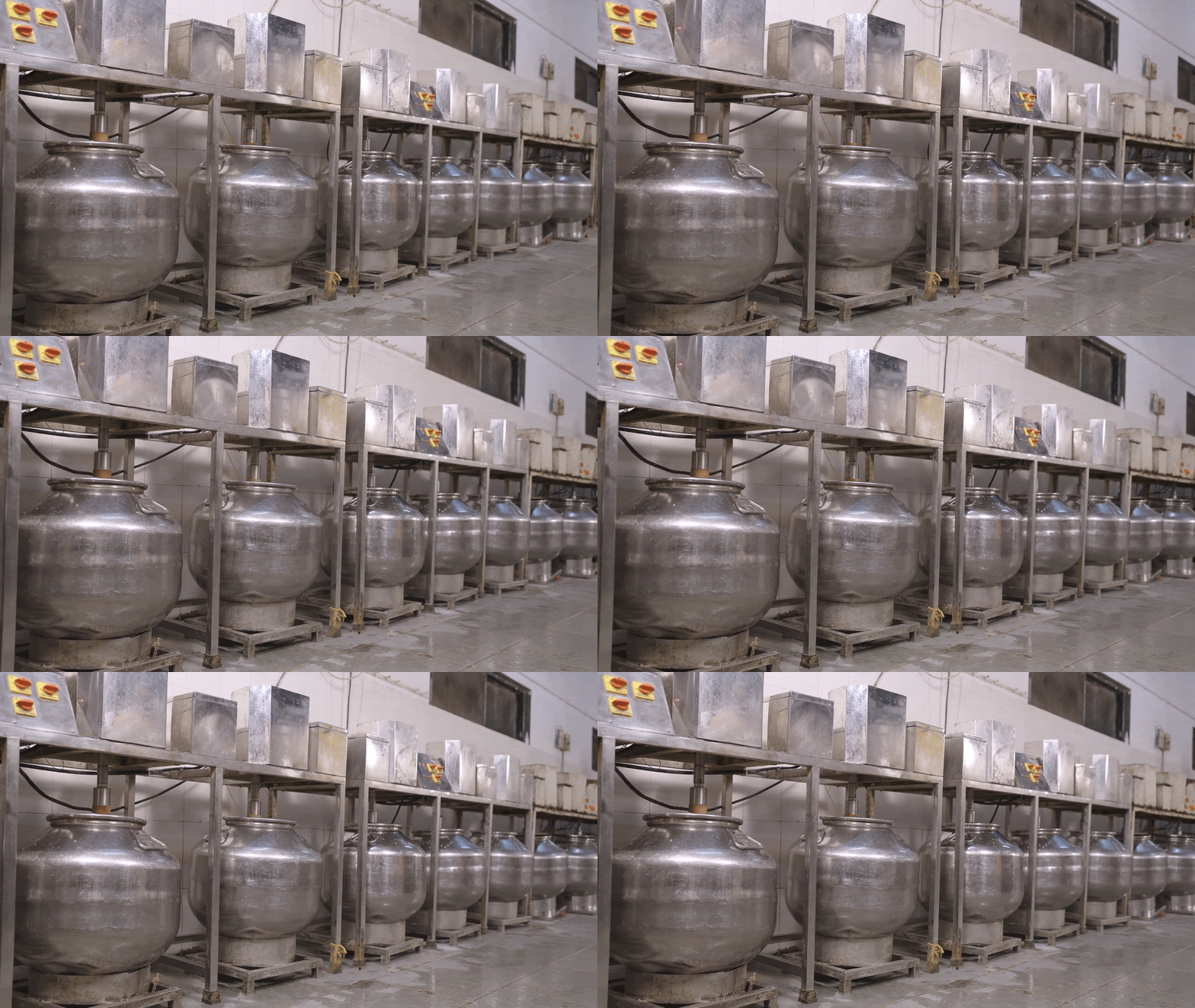
I learned that anonymous drums of pale yellow fat move quietly through trade channels, and that smaller packers buy them and print aspirational words on the outside.
I learned that fat from one animal can be routed, relabelled, and sold as another.
I learned that the word Bilona has a cheaper cousin. It is called Bilona-style. And it is very often just a shortcut wearing the costume of the real thing.
And I learned the one fact that explains all of it. Genuine A2 milk is expensive, and it is slow. So anything sold cheap, in large volume, almost mathematically cannot be what it claims to be.
The problem, I finally understood, was never that honest ghee did not exist. Honest ghee exists. My grandmother made it.
The problem was that a family standing in a shop had no way on earth to tell the honest jar from the costume standing right next to it.
The answer was not a better promise. Every brand already makes the promise.
The answer was proof. Real proof. The kind a family can check for themselves, before they spend a single rupee.
Not purity you are asked to believe. Purity you can verify.
That Is How ELIQO A2 Gir Bilona Ghee Was Born

So I stopped buying ghee altogether. And I went back to making it, the way my family always had, with exactly one modern promise added on top.
Everything I could not verify as a customer, I decided to show you as a founder.
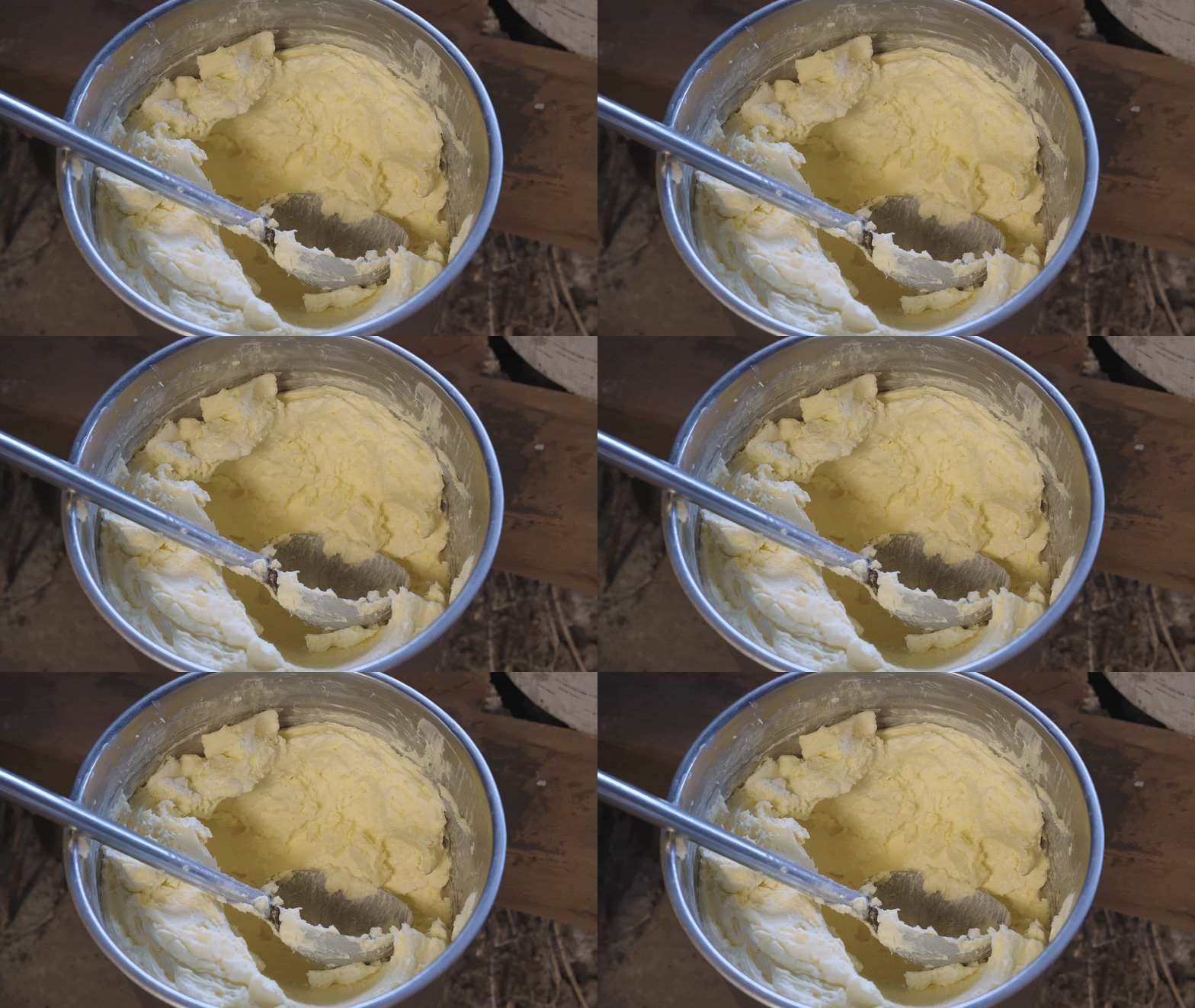
ELIQO A2 Gir Bilona Ghee is made from the milk of indigenous Gir cows. It is hand-churned using the traditional Bilona method, the slow way, in limited quantities. Not Bilona-style. Bilona.
And here is the part that no jar in my own kitchen ever once offered me. You do not have to take my word for any of it.
When you open the jar and warm a spoon of it, the aroma is the test. It is the smell of a kitchen you remember. Nutty, grainy, golden. The way ghee smelled before it started arriving in a factory carton.
A word on A2, because you deserve honesty and not a sales story.
A2 refers to the breed of cow the milk comes from, an indigenous Gir cow. It is not a health claim, and we do not make medical claims about it. Ghee naturally contains only trace protein anyway.
What A2 means for you is simpler, and far more honest than the story most brands tell. It is our promise that the milk is genuinely from Gir cows, and that the ghee is genuinely hand-churned Bilona. And unlike almost anyone else, we hand you the proof instead of asking for your trust.
See the Lab Details and Get Your Jar >>
What Changed in My Own Kitchen

The first thing that changed was not in my body. It was in my head.
The first morning I cooked with our own ghee, I did something I had not done in years. I stopped wondering.
I did not turn the jar over and read the back with suspicion. I did not stand there comparing prices, quietly trying to guess which brand was lying the least. I did not need to. I already knew. I had seen the cows. I had seen the churn. I had read the report with my own eyes.
My mother noticed the smell before she noticed anything else.
She walked into the kitchen, stopped, and said it took her back forty years. To her own mother's kitchen. To a Sunday morning long before any of this.
That smell was the entire benchmark I had spent months chasing. And there it was, at last, in a single warm spoon.
My children ate it on hot rice, with nothing else on the plate, and asked for more. And the smallest thing of all told me it was finally working.
Nobody in the house kept a second trusted jar hidden at the back of the shelf anymore. The one you keep for the days you do not quite believe the jar in front.
That is the quiet thing honest ghee gives a home. Not a promise. The end of second-guessing.
You should not trust a ghee because a founder wrote a heartfelt story. You certainly should not trust mine for that reason alone. So here is what you can actually check, before you spend a rupee.
The breed. Milk from indigenous Gir cows.
The method. Traditional hand-churned Bilona, made in limited quantities. Not Bilona-style.
The report. A lab report you can read, not a badge you are asked to believe.
The licence. FSSAI No. 11526996000338, printed on the pack, verifiable by anyone.
The price. Real Gir A2 Bilona has an honest floor. Ours is priced where genuine ghee has to sit, not where a blend can afford to.
The promise. Your own nose and tongue, and a lab report you can read before you ever spend a rupee.
That is six things you can check for yourself. Most jars on the shelf give you none.
About the Founder
Five generations of my family have made ghee by hand. My grandmother made it on a low flame every Sunday, and the smell of it is one of my earliest memories of home. When I went looking for that same ghee for my own children, I could not find a single jar I fully believed.
So I decided to make it, and to show you everything I could not check as a customer. The farm, the breed, the churn, the lab report. Out in the open, before you spend a rupee.
The Founder, ELIQO Naturals
Comments

Priyanka Deshpande
Is this genuinely different from the ghee in supermarkets? I have been fooled before honestly.
Like · Reply · 👍 14 · 18 Sep
Meenakshi Iyer
I was a skeptic too. The lab report is what made me try it. It is the real thing.
Like · Reply · 👍 9 · 18 Sep
Rajesh Nair
Ordered last month. The smell when you open the jar took my mother straight back to her village. That was all I needed.
Like · Reply · 👍 22 · 18 Sep
Sunita Rao
How long does delivery take? I want it before Diwali.
Like · Reply · 👍 4 · 17 Sep
Karthik Menon
Mine came in 4 days to Bangalore. Well packed.
Like · Reply · 👍 7 · 17 Sep
Arvind Kulkarni
Finally a brand that shows you the source instead of just printing the word pure on the label.
Like · Reply · 👍 16 · 17 Sep-
Lakshmi Narayanan
A bit costlier than my usual one. But after reading how ghee gets adulterated I stopped buying the cheap tin. Worth it.
Like · Reply · 👍 11 · 16 Sep -
Fatima Sheikh
Can anyone confirm this is genuine A2 Gir? Tired of fake claims everywhere.
Like · Reply · 👍 6 · 16 Sep 
Deepak Joshi
The FSSAI number checks out and they sent me the lab test. Genuine as far as I can tell, and I am fussy.
Like · Reply · 👍 8 · 16 Sep
Ramesh Gupta
My wife used to hide a second jar she trusted more. Not anymore. This became the trusted one.
Like · Reply · 👍 13 · 15 Sep-
Anjali Verma
The taste is exactly like my grandmother's. Kids finished it on plain rice in two days.
 Like · Reply · 👍 19 · 15 Sep
-
Vikram Reddy
Was a total doubter. Read the batch report before ordering, that is what got me. Aroma is the real thing.
Like · Reply · 👍 10 · 15 Sep -
Sneha Kapoor
Just placed my order, fingers crossed.
Like · Reply · 👍 3 · 15 Sep -
Mohan Das
You will not regret it.
Like · Reply · 👍 5 · 14 sep -
Harpreet Singh
Three months of using it now. Same aroma and texture every jar. That consistency is genuinely rare.
Like · Reply · 👍 12 · 14 sep -
Divya Menon
Does it come in 1kg? 500g finishes fast in my house.
Like · Reply · 👍 4 · 14 sep -
Suresh Pillai
The grainy texture is how you know it is real bilona. You cannot fake that at scale.
Like · Reply · 👍 9 · 14 sep